Sofia’s caregiving burden
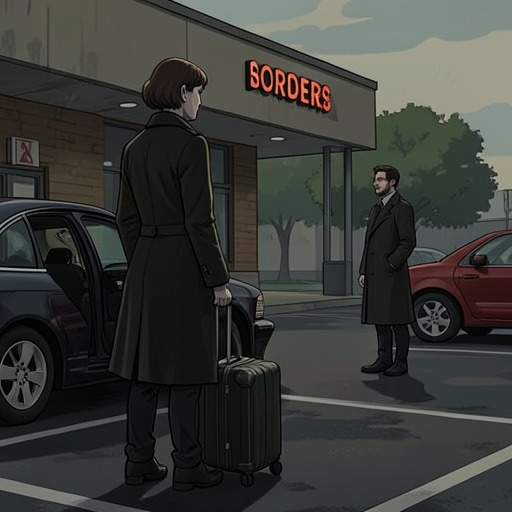
Hot MilkSofia Papastergiadis’s caregiving burden is not a single task but a life organized around Rose Papastergiadis’s fluctuating illness: watching, interpreting, fetching, financing, and trying to keep pace. It gives Sofia a powerful sense of intimacy and purpose, yet also helps explain her interrupted doctorate, insecure work, and difficulty imagining a life beyond her mother’s needs. The journey to the Gómez Clinic in Spain tests whether care can be shared—and what happens when the daughter who has long acted as her mother’s legs sees Rose walking alone.
Origins and daily work
Sofia describes Rose as her preoccupation rather than an occupation of her own. The responsibility reaches back to childhood: when Sofia was four, she asked what a headache meant, and Rose compared it to a door slamming in her head. Over roughly twenty years, Sofia has learned to read her mother’s aches, pains, and triggers, becoming, in her own account, a mind reader for whom Rose’s head can feel like her own. Each apparent clue, however, is followed by another symptom and another prescription; the work of attention produces no lasting answer.
Care is also made of small, recurring acts. At the start of the story, Rose sleeps in the next room beneath a mosquito net and may wake asking for water. Sofia brings it from the fridge, from a bottle left out, or from boiled water cooled in a kettle, but cannot be sure which will count as the right kind. The practical errand becomes a measure of how little certainty the role offers: Sofia can respond immediately and still fail to meet a need whose terms keep shifting. Her attention is constant, but it cannot make Rose’s illness legible or guarantee that her care will satisfy her.
Work, money, and interrupted plans
Rose’s illness has redirected Sofia’s adult life. She left her doctorate when her mother became ill, abandoning a thesis that remains on her damaged laptop. She remembers the change as the end of a dream that had begun when she left Rose alone to pick pears in their East London garden and went to university. After earning a first-class degree and studying for a master’s, Sofia had expected another future; instead, she works at the Coffee House and describes herself as living in its storeroom during the week and at Rose’s on weekends.
The financial commitment to treatment makes that dependence reciprocal and costly. Sofia and Rose remortgage Rose’s house to pay the Gómez Clinic twenty-five thousand euros. Sofia loses eighteen pounds and thirty pence by taking three hours off work for the mortgage interview, while the loan places Rose’s home behind the cost of care. Her estranged father has inherited wealth but, as Sofia sees it, has not shared any of it with her; she calls Rose her creditor and imagines repaying her with her legs, always running around for her. Care thus becomes both unpaid labor and an account of debt: the daughter sustains her mother’s daily life, while her own work and prospects narrow around that obligation.
Shared bodies and the clinic
At the clinic, Sofia’s sense of responsibility takes bodily form. When Rose is called to the desk, Sofia takes her arm and limps beside her. She is twenty-five, but adjusts her pace to her mother’s, describing their movement as a way of finding a convivial speed together. The closeness is not simply metaphorical: Rose has needed an arm to lean on, and Sofia has made herself part of the physical support that enables them to move forward. Yet on that same morning Rose had walked alone to a local Spar to buy hairpins, without even taking a stick. Sofia admits that she does not want to think about this counterexample. Her role depends on real need, but her vigilance can also make independence difficult to acknowledge.
Dr Gómez focuses on the puzzle of Rose’s intermittent ability to walk. He arranges scans and other care, but also asks Sofia to trust his judgment and remain silent during a lunch consultation, so he can get to know Rose without her daughter speaking for her. Staff are to fetch Rose from the beach apartment each day; Sofia is expected at the clinic on Tuesdays and otherwise is told to do as she pleases. The arrangement offers her time apart while making clear how long she has been accustomed to directing her attention toward her mother. During a recorded conversation between Rose and Julieta Gómez, Sofia sits in the physiotherapy room with her laptop, uneasy about being present but having agreed to Dr Gómez’s request. She experiences her freedom as something she must pay for by listening to Rose’s words.
Care, identity, and changing limits
Dr Gómez names the possibility that Sofia has become used to administering Rose’s medication and is, in a sense, coming off it too. He says she has used her mother as a shield against making a life and that the erased medication ritual must be replaced by another one. The explanation does not erase Sofia’s practical care, but it gives that care a second meaning: a routine that helps Rose may also structure Sofia’s days and defer the question of what she wants for herself. When Rose describes her daughter as idle and living off her mother, Sofia leaves the physiotherapy room and loses her way among the marble corridors. Her movement away from Rose is a sharp contrast to their practiced shared limp.
The caregiving pattern also appears in Sofia’s response to other people’s needs. When Alexandra, holding her nursing baby, asks for water, Sofia gets a glass from the fridge and adds ice, lemon, and a strawberry. The moment does not equate Alexandra’s request with Rose’s illness, but shows how readily Sofia takes up the work of noticing and supplying what someone cannot fetch for herself. Her care is competent and particular; it is also a habit formed within a life where another person’s needs have repeatedly taken priority.
Near the end, Sofia sees Rose walking alone along the beach in a sunflower-patterned dress, carrying a hat. She is initially unsure whether the sight is real, then recognizes that her mother is walking and chooses not to approach. Instead she returns to the sea, later swimming among the medusas as Rose remains on the shore. When Sofia comes out of the water, she searches for Rose’s footprints and draws a rectangle around the first pair in the sand. The gesture preserves evidence of Rose’s independent steps, but does not resolve what they mean for their relationship. Sofia’s burden has depended on accompanying, interpreting, and physically supporting her mother; this sight makes Rose’s capacity visible without immediately freeing Sofia from the habits or feelings built around care. The footprints mark both a change in what Rose can do and the uncertainty of who Sofia might be when she is no longer required to be her mother’s legs.